
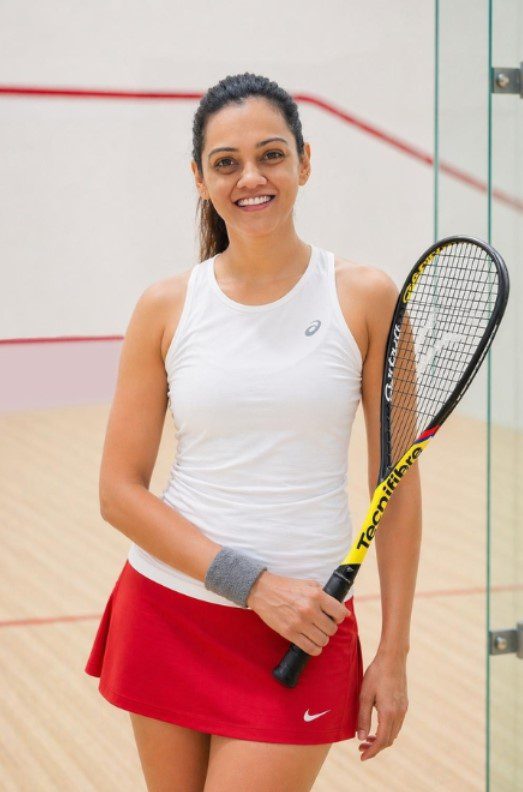

Palak Maheshwari picked up a squash racket for the first time at 32. Three years later, she holds the national No. 2 ranking in the W035 category and is preparing for the World Squash Masters. This is not a late-bloomer story. It is something more deliberate than that.
New Delhi [India], April 30: There is a particular kind of confidence that does not announce itself. It shows up in decisions, the kind that look questionable from the outside and obvious only in hindsight. When Palak Maheshwari walked onto a squash court for the first time at the age of 32, most people around her would have had questions. She did not seem to have any.
Today, three years after that first session, she is ranked No. 2 in India in the W035 squash category — runner-up at the Squash Masters Nationals (a 7-star national event) and the Goa Squash Masters (5-star), and now confirmed to represent India at the World Squash Masters. She had no prior sporting background. No junior career, no coaching history, no institutional pathway. Just a decision, and the discipline to back it.
“No One Told Me I Could. So I Didn’t Wait for Permission.”
Palak does not speak like someone who has recently achieved something remarkable. She speaks like someone who expected it. Not in an arrogant way — in the way that people who have thought carefully about what they are doing tend to sound. Certain. Unhurried.
She had come to squash from a life already full. A corporate finance career with MetLife and Ernst & Young. A serious interest in food photography that eventually earned her a place in Nikon’s global collection — the only Indian food photographer to be featured. The founding, in 2021, of a Delhi-based creative agency that today works with consumer brands across India.
“Squash wasn’t something I stumbled into. I’d been thinking about sport for a while. I just needed to find the one that matched how I think. Squash is fast, it’s strategic, and it punishes you immediately if your mind wanders. That felt right.”
“Squash is fast, it’s strategic, and it punishes you immediately if your mind wanders. That felt right.”
Within 18 months of starting, she had broken into the top 50 women squash players in India. By the end of year three, she stood on the national podium. The progression, by any measure, is extraordinary. The sport’s governing structure is unforgiving, rankings are earned through competitive performance, not accumulated over time. She earned hers the same way everyone else does, except in a third of the time most people expect it to take.
But the progression was not clean. The early months on court were humbling in a way she had not anticipated. A beginner’s footwork, a beginner’s reading of the ball, competing in a sport where the margins are physical as much as mental. There were matches she lost decisively, sessions that did not come together, plateaus that sat longer than expected. The sport does not accommodate shortcuts — not for anyone, and certainly not for someone starting at 32 in a field where opponents had been playing for a decade longer.
What she did not do was reframe the difficulty as a sign to stop. Setbacks on court were processed the way she had learned to process them elsewhere — as information, not as verdicts. She adjusted her training, tightened her preparation, and kept returning. The ranking did not arrive despite the struggle. In a meaningful sense, it arrived because of it.
Training Before Dawn. Running a Business by Day.
What makes the ranking harder to dismiss is the context in which it was built. Palak trains in the early hours of the morning, before most of Delhi is awake. The rest of the day belongs to her agency, her clients, and the administrative reality of running a business. There is no choosing one over the other. Both exist at the same time, sustained by the same standards.
She does not frame this as sacrifice. She frames it as structure. “People ask me how I manage both. But I think the real question is why we assume you have to choose. The discipline you build in one area doesn’t stay there. It moves. It shows up everywhere, in how you prepare for a match, in how you walk into a client meeting, in how you handle a setback. It’s the same thing.”
“The discipline you build in one area doesn’t stay there. It moves. It shows up everywhere.”
What India No. 2 Actually Means
The W035 category at the national level is not a consolation bracket. It brings together some of the most competitive squash players in the country, women who in many cases have been playing since their twenties, who have years of match experience and physical conditioning behind them. The fact that Palak reached No. 2 in this field, starting from zero at 32, is not a footnote to her story. It is the story.
The World Squash Masters will be her next stage. It is the first time she will compete internationally under the Indian flag, representing a journey that, by conventional timelines, should not have been possible. The fact that it is possible, that she is here, ranked, competing, and advancing, is the part worth paying attention to.
Beyond the Court
Before squash became the axis of her public story, Palak had quietly built a portfolio of achievements that most people would consider a full career by themselves. Her food photography earned her recognition at Nikon’s international level, a distinction no other Indian photographer in her category has received. Her creative agency, Global Platter, has worked with brands including PizzaExpress, ITC, and Bikanervala, building visual content for a generation of D2C companies that take aesthetics seriously.
What becomes clear across her journey is that none of it — the photography, the agency, the squash ranking, is about accumulation. It is about the same thing, expressed in different forms: the belief that the standard you hold yourself to is the only timeline that actually matters. She started at 32 because that is when she started. And that, it turns out, was early enough.
Palak Maheshwari is India’s No. 2 ranked squash player (W035 category) and founder of Global Platter, a Delhi-based creative agency.