
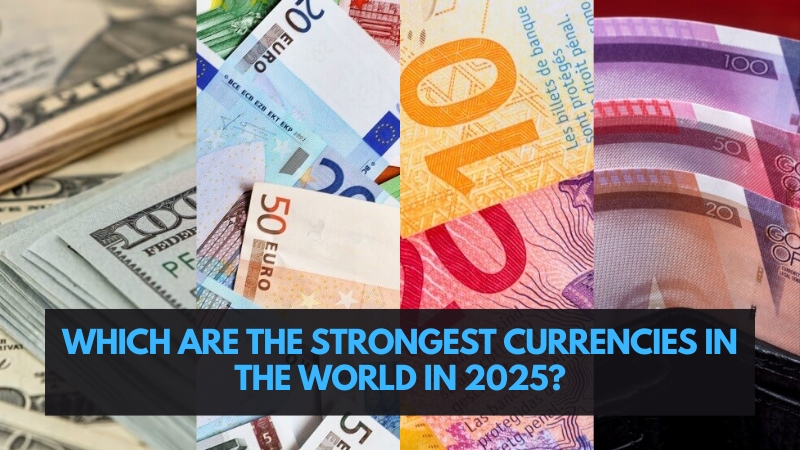

The U.S. Dollar remains the world’s most traded currency, yet it isn’t the most valuable by exchange rate. In 2025, several smaller but highly stable nations will have currencies that outperform the Dollar in direct value. Countries such as Kuwait, Bahrain, and Oman lead the pack, supported by strong oil wealth, low inflation, and disciplined monetary policies.
A “strong” currency doesn’t always belong to a large economy; it reflects economic stability, investor confidence, and steady demand. Exchange rates move based on how well a country manages its inflation, reserves, and exports. While the U.S. Dollar dominates international trade, the strongest currencies in the world (2025) prove that true strength often comes from sound financial management rather than economic size.
This guide explores which currencies rank at the top, what makes them hold such high value, and how they compare against both the U.S. Dollar and the Indian Rupee.
What Is Currency Strength?
A strong currency holds a higher value when compared to others. Simply put, if one unit of your money can buy more of another currency, it’s considered stronger. For instance, one Kuwaiti Dinar is worth more than three U.S. Dollars, making it the most valuable currency today.
The strength of a currency is shaped by several factors: the country’s economic health, inflation levels, interest rates, and how much global demand exists for its money. When inflation remains under control, exports stay consistent, and central banks manage foreign reserves carefully, the currency usually maintains its value and stability.
What Makes a Currency Strong?
A strong currency maintains a high value when exchanged for others. The exchange rate reflects how much one unit of a nation’s money is worth compared to another. If a currency can buy more goods or services abroad, it is considered stronger. For instance, one Kuwaiti Dinar equals more than three U.S. Dollars, showing its real purchasing power.
Central banks play a key role in keeping currencies stable. They adjust interest rates, regulate the money supply, and hold reserves in gold and foreign assets. Nations that export oil or valuable commodities often enjoy steady foreign income, which supports the value of their currency.
Kuwait remains the clearest example. Despite having a smaller economy than the U.S., its Dinar holds the highest exchange value in the world. Strong oil exports, low inflation, and well-managed reserves have earned investor trust and kept the Kuwaiti Dinar at the top.
Top 10 Currencies Stronger Than the U.S. Dollar (2025 Updated List)
1. Kuwaiti Dinar (KWD)
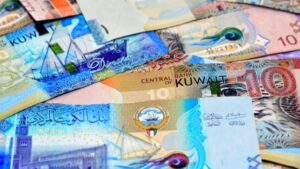
Value vs USD: 1 KWD ≈ $3.26 USD
Value vs INR: ≈ ₹270 – ₹275
The Kuwaiti Dinar holds the highest exchange value in the world. Kuwait’s economy depends heavily on oil exports, and its central bank manages the Dinar through a tightly controlled exchange policy. Even with a small population, the country’s massive oil income, low inflation, and strong financial reserves keep the Dinar unmatched in strength and stability.
2. Bahraini Dinar (BHD)
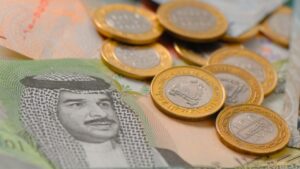
Value vs USD: 1 BHD ≈ $2.65 USD
Value vs INR: ≈ ₹220 – ₹225
The Bahraini Dinar remains firmly pegged to the U.S. Dollar. Bahrain’s economy, built on oil, finance, and services, has grown under disciplined fiscal control. The government’s strict inflation management and consistent monetary policy have maintained the Dinar’s value for decades. Its link to the Dollar gives investors reliability and long-term confidence.
3. Omani Rial (OMR)
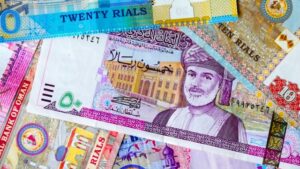
Value vs USD: 1 OMR ≈ $2.60 USD
Value vs INR: ≈ ₹215 – ₹220
The Omani Rial consistently ranks among the top three strongest global currencies. Like Kuwait and Bahrain, Oman earns significant revenue from oil exports, which supports its currency. The Rial is pegged to the Dollar at a high rate and backed by solid reserves. Strong governance, low inflation, and careful fiscal policies ensure steady value year after year.
4. Jordanian Dinar (JOD)
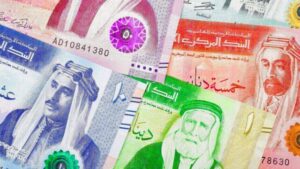
Value vs USD: 1 JOD ≈ $1.41 USD
Value vs INR: ≈ ₹117 – ₹120
The Jordanian Dinar holds a strong position despite limited oil exports. Jordan’s central bank maintains a fixed exchange rate with the U.S. Dollar and follows strict monetary policies to ensure stability. Steady foreign aid, remittances, and economic reforms have helped keep investor trust high, preserving the Dinar’s long-term strength.
5. British Pound Sterling (GBP)
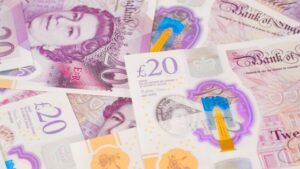
Value vs USD: 1 GBP ≈ $1.32 USD
Value vs INR: ≈ ₹109 – ₹111
The British Pound remains one of the most traded and trusted global currencies. Representing a diverse and developed economy, it benefits from London’s strong financial hub. Despite challenges like Brexit and market volatility, the Pound’s global demand and the U.K.’s stable governance help it maintain a high and consistent value.
6. Gibraltar Pound (GIP)
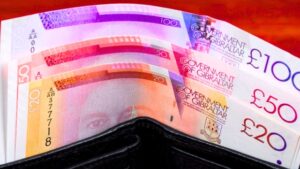
Value vs USD: 1 GIP ≈ $1.32 USD
Value vs INR: ≈ ₹109 – ₹111
The Gibraltar Pound mirrors the British Pound exactly, as it’s pegged to it at a 1:1 ratio. Though Gibraltar is a small territory, its currency remains strong because of this fixed link and the region’s direct financial alignment with the U.K.
7. Cayman Islands Dollar (KYD)
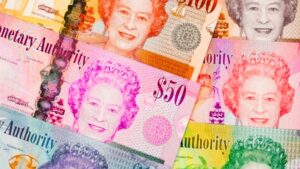
Value vs USD: 1 KYD ≈ $1.22 USD
Value vs INR: ≈ ₹100 – ₹102
The Cayman Islands Dollar is the official currency of one of the world’s top offshore financial hubs. It is pegged to the U.S. Dollar, ensuring long-term stability. The islands’ economy, driven by banking, investments, and tourism, keeps the KYD strong and predictable.
8. Swiss Franc (CHF)
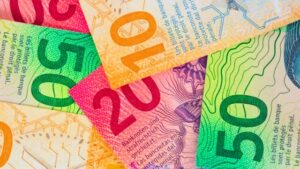
Value vs USD: 1 CHF ≈ $1.20 USD
Value vs INR: ≈ ₹99 – ₹100
The Swiss Franc is widely known as a safe-haven currency. Switzerland’s stable government, low inflation, and strong banking sector attract global capital, especially during uncertain times. Investors trust the Franc for its reliability and protection against market volatility.
9. Euro (EUR)
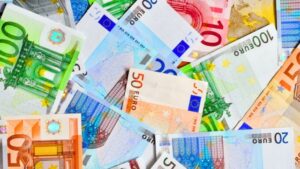
Value vs USD: 1 EUR ≈ $1.12 USD
Value vs INR: ≈ ₹93 – ₹94
The Euro is the world’s second-most traded currency after the U.S. Dollar. Representing 20 European Union nations, it carries massive economic influence. Though its unit value is lower than others on this list, its broad global use and strong institutional backing make it a pillar of international finance.
10. United States Dollar (USD)

Value vs USD: 1 USD = $1.00
Value vs INR: ≈ ₹83 – ₹84
The U.S. Dollar remains the foundation of global finance and trade. It’s used as the main reserve currency worldwide and underpins most commodity pricing and international transactions. While other currencies may have higher face value, none match the Dollar’s reach, liquidity, and dominance in the global economy.
Comparison Table: Currency Value vs. USD (2025)
| Rank | Currency | Code | 1 Unit = USD | 1 Unit = INR (Approx.) | Key Driver of Strength |
|---|---|---|---|---|---|
| 1 | Kuwaiti Dinar | KWD | $3.26 | ₹270 – ₹275 | Oil exports, large reserves, and low inflation |
| 2 | Bahraini Dinar | BHD | $2.65 | ₹220 – ₹225 | Oil-based economy, USD peg, and fiscal discipline |
| 3 | Omani Rial | OMR | $2.60 | ₹215 – ₹220 | Pegged to USD, strong reserves, and stable policies |
| 4 | Jordanian Dinar | JOD | $1.41 | ₹117 – ₹120 | Fixed exchange rate and tight monetary control |
| 5 | British Pound Sterling | GBP | $1.32 | ₹109 – ₹111 | Global financial hub and diverse economy |
| 6 | Gibraltar Pound | GIP | $1.32 | ₹109 – ₹111 | Pegged to GBP, backed by the UK’s financial system |
| 7 | Cayman Islands Dollar | KYD | $1.22 | ₹100 – ₹102 | Pegged to USD, strong finance and tourism sector |
| 8 | Swiss Franc | CHF | $1.20 | ₹99 – ₹100 | Safe-haven reputation and minimal inflation |
| 9 | Euro | EUR | $1.12 | ₹93 – ₹94 | Eurozone stability and reserve currency role |
| 10 | U.S. Dollar | USD | $1.00 | ₹83 – ₹84 | Global trade dominance and reserve currency status |
Why Are Gulf Currencies So Strong?
Currencies from the Gulf region, such as the Kuwaiti Dinar, Bahraini Dinar, and Omani Rial, remain the strongest in the world because they are backed by steady oil revenue, strict financial discipline, and strong government oversight. These nations earn billions from oil exports, with most transactions conducted in U.S. Dollars. This continuous inflow of dollars, often referred to as the petrodollar system, gives them a reliable stream of foreign income to support their currencies.
Many Gulf countries maintain pegged exchange rates, fixing their currencies to the U.S. Dollar at a stable value. This system reduces volatility and provides investors with confidence that the currency won’t swing sharply due to market pressures. Since global oil trade is priced in dollars, the peg also helps maintain balance and predictability.
In addition, Gulf central banks hold substantial reserves in dollars and gold. These reserves serve as a financial cushion during market shocks. When combined with low inflation, prudent fiscal policies, and political stability, these measures ensure that Gulf currencies remain some of the most dependable and valuable in the global economy.
Other Strong Regional Currencies (Worth Watching)
Some currencies may not surpass the U.S. Dollar in direct exchange value, but they are among the most stable and respected in the global market. The Singapore Dollar, Brunei Dollar, Australian Dollar, and Canadian Dollar stand out for their reliability, economic strength, and investor trust. Each plays a major role in its region and reflects sound financial governance.
1. Singapore Dollar (SGD)
The Singapore Dollar is recognized for its consistency and prudent management by the Monetary Authority of Singapore (MAS). Singapore’s economy thrives on low inflation, a strong trade balance, and a disciplined monetary policy. Its currency is widely used across Asia for cross-border trade and is considered one of the safest options for international business transactions.
2. Brunei Dollar (BND)
The Brunei Dollar is pegged to the Singapore Dollar at a fixed 1:1 exchange rate, meaning both currencies move in sync. Brunei’s economy, built on oil and gas wealth, along with its close financial alignment with Singapore, keeps the BND stable and highly credible.
3. Australian Dollar (AUD)
The Australian Dollar ranks among the top-traded currencies worldwide. Its strength comes from a resource-driven economy, steady governance, and relatively high interest rates compared to other Western nations. The AUD often gains value when global demand for commodities like iron ore, coal, and natural gas increases.
4. Canadian Dollar (CAD)
The Canadian Dollar, often called the “Loonie,” benefits from Canada’s diverse and export-oriented economy. The country’s energy, mineral, and technology exports, combined with a reliable banking sector and close trade relations with the U.S., make the CAD one of the most trusted currencies in North America.
Together, these regional currencies show that economic stability, responsible policy, and export strength can make a nation’s currency powerful, even without exceeding the U.S. Dollar’s nominal value.
Honourable Mentions: Other Strong Currencies (Rank 11–25)
While they don’t appear in the top 10, several other currencies remain strong, stable, and widely respected in the global market. These currencies are supported by well-managed economies, strong trade performance, and consistent central bank policies that help maintain long-term value against the U.S. Dollar.
| Currency | Country | Code |
|---|---|---|
| Canadian Dollar | Canada | CAD |
| Brunei Dollar | Brunei | BND |
| Singapore Dollar | Singapore | SGD |
| Australian Dollar | Australia | AUD |
| New Zealand Dollar | New Zealand | NZD |
| Hong Kong Dollar | Hong Kong | HKD |
| Libyan Dinar | Libya | LYD |
| Falkland Islands Pound | Falkland Islands | FKP |
| Bermudian Dollar | Bermuda | BMD |
| Aruban Florin | Aruba | AWG |
| Bahamian Dollar | Bahamas | BSD |
| Qatari Riyal | Qatar | QAR |
| Saudi Riyal | Saudi Arabia | SAR |
| Chinese Yuan Renminbi | China | CNY |
| UAE Dirham | United Arab Emirates | AED |
These currencies are often used in international trade, travel, and investment because they maintain stable exchange systems and enjoy high confidence among global markets. Their consistent performance shows that financial discipline and steady policy, not just face value, define a strong currency.
Myths About Currency Strength
It’s a common misconception that the country with the strongest currency is also the richest. In reality, a high exchange rate doesn’t always reflect a large or powerful economy. Some nations maintain strong currencies by limiting their money supply, while others intentionally keep their currencies weaker to make exports more competitive in global markets.
For instance, Kuwait and Oman have some of the highest-valued currencies in the world, yet their economies are much smaller than those of the United States or China. Their currency strength comes from steady oil exports, controlled inflation, and stable monetary policies rather than overall production or economic size.
This is where the concept of Purchasing Power Parity (PPP) becomes useful. PPP measures how much a fixed amount of money can buy in different countries. For example, one U.S. Dollar may buy less in Switzerland than in India because living costs and prices are higher there. So, while the Swiss Franc has a high nominal value, it doesn’t mean that goods or services are cheaper in Switzerland. In short, exchange value measures strength, but PPP shows true buying power.
Historical Overview: The Rise and Fall of Currency Values (2000–2025)
Between 2000 and 2025, the global currency landscape has shifted repeatedly due to oil price changes, inflation waves, geopolitical events, and technological disruptions. The U.S. Dollar has remained the most traded and trusted currency, yet its dominance has faced several challenges over the past two decades.
In the early 2000s, the Dollar held firm as the backbone of international trade, supported by a growing U.S. economy and strong investor confidence. However, the 2008 global financial crisis triggered a wave of uncertainty, pushing investors toward safer assets like the U.S. Dollar and the Swiss Franc. Meanwhile, the Euro, once seen as a strong rival, weakened during the European debt crisis (2010–2013), when nations such as Greece and Spain struggled with high debt and economic instability.
Throughout this period, oil-rich Gulf nations maintained their advantage. Currencies like the Kuwaiti Dinar, Omani Rial, and Bahraini Dinar stayed strong, supported by their governments’ large reserves, steady oil revenues, and tightly managed exchange systems, even during oil price downturns.
After 2020, the global economy was reshaped by the COVID-19 pandemic, leading to record government spending, inflation surges, and rising interest rates. Many currencies weakened temporarily, while the U.S. Dollar strengthened as investors looked for safe holdings. By 2023–2025, growing inflation and global debt pushed many countries to diversify their reserves, investing more in gold, the Chinese yuan, and even digital currencies, signaling a slow but visible shift away from Dollar dependence.
Looking ahead, the U.S. Dollar is likely to remain the world’s leading reserve currency, but its share of global reserves is gradually declining. Increased trade in local currencies, especially among China, India, and Gulf economies, points toward a more multi-currency world, where financial influence is more balanced and widely distributed than ever before.
Latest Exchange-Rate Trends (2025 Updates)
The global currency market in 2025 shows a calmer picture compared to previous years, with Gulf currencies maintaining their dominance against the U.S. Dollar. The Kuwaiti Dinar (KWD), Bahraini Dinar (BHD), Omani Rial (OMR), and Jordanian Dinar (JOD) continue to trade in narrow, stable ranges, a sign of disciplined monetary policy and strong reserve backing.
Over the past six months, 1 KWD has traded between $3.26–$3.28, 1 BHD around $2.65–$2.66, 1 OMR near $2.59–$2.60, and 1 JOD close to $1.41. These tight exchange bands highlight how pegged systems and reserve management minimize volatility and maintain investor confidence.
1. Oil and Energy Connection
As of November 2025, Brent crude oil prices have eased to around $64–$65 per barrel, down from earlier highs. Forecasts suggest an average of $60–$62 toward the end of 2025, as global inventories recover and OPEC+ gradually increases supply. While lower oil prices usually weaken petrocurrencies, Gulf nations like Kuwait, Bahrain, and Oman remain largely unaffected because their exchange rates are tightly pegged to the Dollar and supported by large sovereign reserves.
2. Inflation and Interest Rates
According to the IMF, global inflation is expected to cool to around 4.4% in 2025, reducing the risk of currency shocks that often destabilize currencies. In the U.S., the Federal Reserve’s effective funds rate has eased to roughly 4.1%, down from the aggressive tightening seen between 2022 and 2024. Softer U.S. rates have trimmed the Dollar’s earlier strength, allowing other major currencies, such as the Euro and Pound Sterling, to gain modestly.
3. G10 and European Overview
Analysts expect the Euro (EUR) to hover between 1.15–1.20 USD and the British Pound (GBP) to remain near 1.31–1.36 USD through late 2025 and early 2026. This reflects a mild weakening of the Dollar rather than a full reversal. While some short-term upticks in the Dollar followed the Fed’s autumn decisions, the broader trend depends on global growth and interest-rate trajectories.
4. Stability of Gulf Currency Pegs
Recent data continues to affirm the stability of Gulf pegs:
- KWD: Topped at around $3.28, showing minimal movement.
- BHD: Stayed near $2.65, with barely any variation.
- OMR: Averaged about $2.60 across 2025.
- JOD: Held steady at $1.41, unchanged for several years.
These narrow ranges show how well central banks in the Gulf manage their exchange rates, combining dollar reserves, fiscal discipline, and oil-backed stability to maintain consistency.
5. Digital Currencies and Fintech Impact
The year 2025 has also brought major progress in digital finance. According to the Bank for International Settlements (BIS), over 90% of central banks are actively researching or testing Central Bank Digital Currencies (CBDCs). Initiatives like Project mBridge are building shared ledgers for cross-border payments and FX settlement.
In Asia, India’s e-Rupee pilot has expanded significantly, and the Reserve Bank of India (RBI) recently opened a retail testing sandbox for new use cases. These digital projects are making cross-border transactions faster and cheaper, though macro factors like inflation, trade, and reserves still determine long-term currency strength.
Bottom Line for 2025
With oil prices easing, inflation cooling, and U.S. rates stabilizing, foreign exchange markets are entering a calmer phase. Gulf currencies continue to set the standard for high face value and consistency, while the Euro, Pound, and Swiss Franc move more with growth and rate differentials.
Digital finance is reshaping how money moves across borders, but the core forces, policy, inflation, trade balance, and reserve strength, remain the real anchors of currency power in 2025.
Practical Takeaways for Readers (2025)
Understanding how currencies gain and hold strength isn’t just interesting; it’s practical knowledge for travelers, investors, and professionals dealing in global markets. Here’s how you can make the most of this information safely and effectively in 2025.
1. Investing or Trading in Foreign Currencies
Foreign exchange (forex) trading can offer real opportunities, but it also carries high risk. If you’re new, begin with small trades and always use regulated platforms that provide real-time market data and protection tools like stop-loss orders.
Trade only through authorized brokers and avoid unverified apps or “get-rich-quick” promises.
Diversify your currency portfolio instead of focusing on a single currency, which helps reduce exposure to sudden market swings.
Keeping track of central bank announcements, inflation reports, and oil price movements can help you anticipate shifts in major currencies like the USD, EUR, and KWD.
2. Best Currencies to Hold for Travelers in 2025
For travelers, stability and acceptance matter more than exchange rate value. The U.S. Dollar (USD), Euro (EUR), Swiss Franc (CHF), and Singapore Dollar (SGD) remain the most reliable travel currencies worldwide, easily exchangeable in most countries.
If you’re visiting the Middle East, currencies like the Kuwaiti Dinar (KWD), Bahraini Dinar (BHD), and Omani Rial (OMR) offer high local value but limited use outside their borders. Always convert leftover currency back before departure to avoid losing value on return.
3. Useful Tools to Track Exchange Rates
Tracking live exchange rates is easier than ever. Many reliable online converters and mobile tools provide real-time currency values, historical data, and rate alerts to help users make smarter exchange or investment decisions.
You can set up notifications when a currency reaches your preferred rate, compare daily averages, or review long-term trends before converting. These features make it simple to plan international transactions, travel budgets, or forex trades with more confidence and transparency.
Quick Tip: Always compare rates from two or more sources, and avoid airport exchange counters, which usually add steep markups or hidden fees.
In short, safe investing, smart travel planning, and digital tools for monitoring rates can help you turn currency awareness into a real financial edge in 2025.
Price Table: 2025 Exchange Rate Snapshot
Below is a summary of the strongest global currencies and their average exchange rates as of late 2025.
The data reflects approximate averages from Google Finance and XE Currency Converter, with year-on-year (YoY) changes compared to 2024.
| Currency | Exchange Rate (vs INR) | Exchange Rate (vs USD) | Change (YoY %) |
|---|---|---|---|
| Kuwaiti Dinar (KWD) | ₹270 – ₹275 | $3.26 USD | ▲ +0.3% |
| Bahraini Dinar (BHD) | ₹220 – ₹225 | $2.65 USD | ▲ +0.2% |
| Omani Rial (OMR) | ₹215 – ₹220 | $2.60 USD | ≈ 0% |
| Jordanian Dinar (JOD) | ₹117 – ₹120 | $1.41 USD | ≈ 0% |
| British Pound (GBP) | ₹109 – ₹111 | $1.32 USD | ▲ +1.8% |
| Gibraltar Pound (GIP) | ₹109 – ₹111 | $1.32 USD | ▲ +1.7% |
| Cayman Islands Dollar (KYD) | ₹100 – ₹102 | $1.22 USD | ≈ 0% |
| Swiss Franc (CHF) | ₹99 – ₹100 | $1.20 USD | ▲ +1.2% |
| Euro (EUR) | ₹93 – ₹94 | $1.12 USD | ▲ +1.0% |
| United States Dollar (USD) | ₹83 – ₹84 | $1.00 USD | ▼ –0.8% |
Notes:
- Data compiled from Google Finance, XE, and Bloomberg FX Monitor (as of November 2025).
- Gulf currencies remain almost unchanged due to fixed or tightly managed pegs to the U.S. Dollar.
- Western currencies such as the Pound, Euro, and Franc posted small gains as global inflation cooled and energy prices eased.
What 2025 Teaches About Currency Strength
The 2025 rankings once again prove that the strongest currencies in the world don’t always belong to the largest economies. The Kuwaiti Dinar (KWD), Bahraini Dinar (BHD), and Omani Rial (OMR) continue to dominate the global charts, each valued several times higher than one U.S. Dollar. Their exceptional strength comes from fiscal discipline, low inflation, high oil reserves, and careful monetary management, not from population size or total export volume.
The key lesson is clear: economic policy matters more than economic size. Countries that control inflation, build strong reserves, and maintain political and financial stability are able to protect their currencies for decades. This is why small but disciplined Gulf nations often outperform global powerhouses like the U.S. or China when it comes to face-value strength.
Looking ahead to the next three to five years, the overall hierarchy of global currencies is expected to remain steady. The U.S. Dollar will likely retain its position as the world’s dominant reserve currency, while the Gulf currencies and European majors (like the Euro, Pound, and Swiss Franc) will stay resilient and stable.
At the same time, digital currencies, fintech innovation, and cross-border payment systems are gradually transforming how money moves around the world. As countries experiment with CBDCs and regional trade settlements in local currencies, the financial map is evolving.
Still, the fundamentals remain unchanged; trust, stability, and sound economic policy will continue to define which currencies hold real strength in the years ahead.
Frequently Asked Questions About the Strongest Currencies in the World (2025)
Q1. What is the weakest currency in the world right now?
Answer: As of 2025, the Iranian Rial (IRR) remains the weakest currency globally, mainly due to high inflation, limited foreign investment, and ongoing trade sanctions.
Q2. What is the most traded currency in the world?
Answer: The U.S. Dollar (USD) is still the most traded and widely used currency in global commerce and forex markets, forming one side of nearly 90% of all global currency trades.
Q3. How are foreign currencies priced?
Answer: Exchange rates are determined either by floating systems (based on market demand and supply) or fixed pegs (controlled by a country’s central bank). For example, the Bahraini Dinar (BHD) is pegged to the U.S. Dollar at a stable rate, keeping its value steady for decades.
Q4. What is the most stable currency?
Answer: The Swiss Franc (CHF) is considered the most stable currency in the world. Switzerland’s low inflation, strong banking sector, and political neutrality make the Franc a global “safe-haven” currency.
Q5. What is the strongest currency pair?
Answer: The Euro (EUR) / U.S. Dollar (USD) pair is the most traded currency pair worldwide. It reflects the economic strength of both the Eurozone and the United States, accounting for a major share of global forex transactions.
Q6. Which countries use the Kuwaiti Dinar?
Answer: The Kuwaiti Dinar (KWD) is used only in Kuwait, but it remains the highest-valued currency in the world.
Q7. Does a strong currency mean a rich country?
Answer: Not always. Some smaller nations, such as Kuwait, Bahrain, and Oman, maintain strong currencies through oil exports, fiscal discipline, and foreign reserves, even though their GDPs are much smaller than those of global powers like the U.S. or China.
Disclaimer:
This article is intended for informational and educational purposes only. It should not be taken as financial, investment, trading, or business advice. All currency values, exchange rates, and examples are based on publicly available data from Google Finance, IMF, Bloomberg, and other reliable sources as of November 2025, and may change over time. We are not registered with SEBI, RBI, IRDAI, or any other financial authority as investment or forex advisors. Readers are strongly advised to verify all information independently and consult a qualified financial expert before making any currency exchange, trading, or investment decisions.